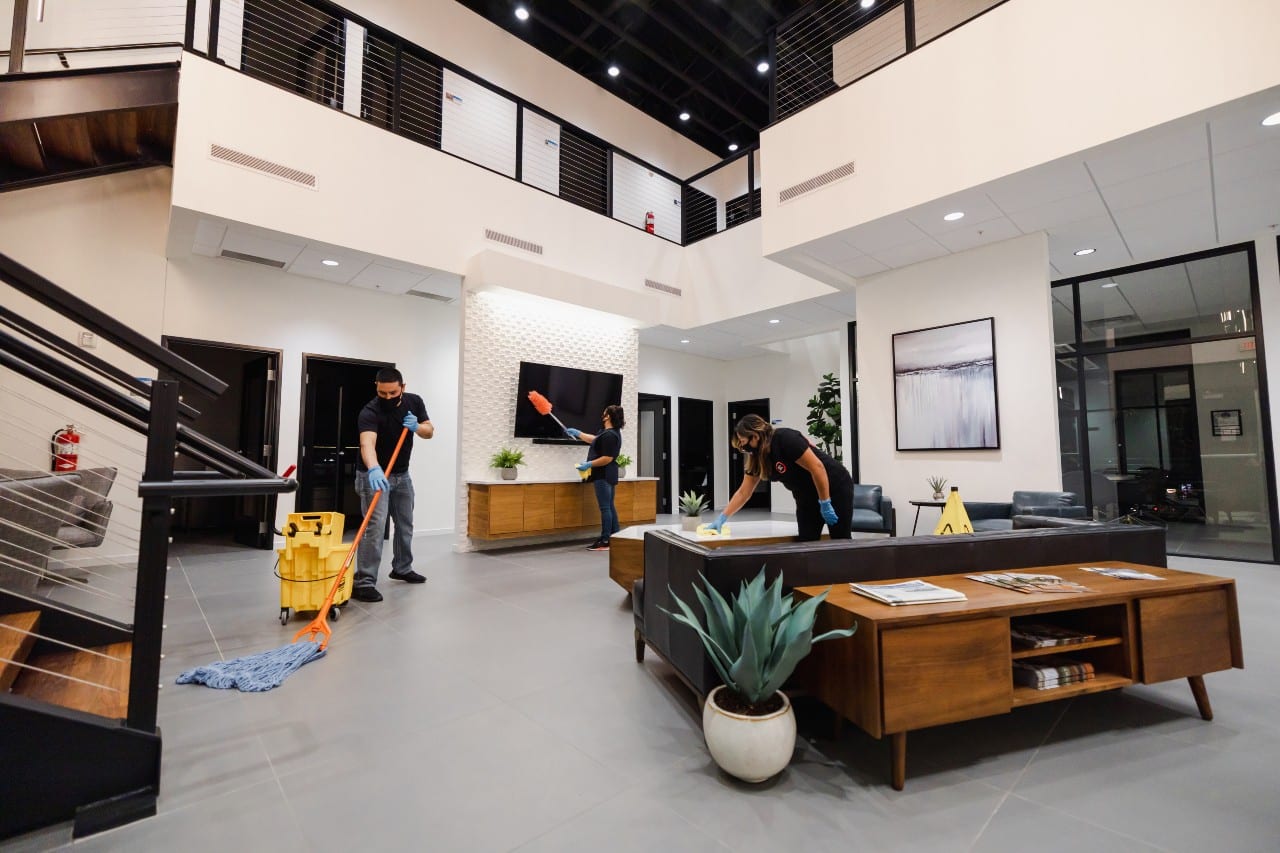
Your patients and clients form an impression before they sit down. They notice the waiting room chairs, the reception counter, the restroom. They are not running a white-glove test. They are simply deciding whether they trust you.
That trust is harder to earn than most practice managers realize, and easier to lose. A lobby that looks clean is not the same as a lobby that is clean. Dust on a baseboard, a smudged door handle, a restroom that smells like it was rushed through — these details register, even when no one says anything out loud.
So what do specialized cleaning standards for medical offices actually require? And why do standard janitorial routines fall short? This post covers both questions directly.
In this post, you’ll learn:
- Why medical and professional offices carry a higher contamination risk than standard commercial spaces
- The real difference between cleaning, sanitizing, and disinfecting
- Which surfaces and areas require targeted attention in these environments
- What trained janitorial staff bring that informal cleaning routines cannot
Medical and Professional Offices Are Not Standard Commercial Spaces

A dental practice, medical clinic, or professional service firm sees a different kind of foot traffic than a typical office building. Patients and clients cycle through shared spaces throughout the day, often when they are already unwell or stressed. Staff move between exam rooms, consultation areas, and common spaces continuously.
That volume creates elevated cross-contamination risk. Surfaces that seem low-stakes in a standard office, like a door handle or a shared pen, become genuine transmission points in a medical or professional setting. The CDC’s guidance on cleaning and disinfecting makes clear that high-touch surfaces in shared environments require consistent, targeted attention, not just periodic wiping.
Regulatory and compliance expectations add another layer. Standard janitorial routines are not designed with those requirements in mind. A cleaning plan that works for a warehouse or retail space does not translate directly to a medical office, a dental practice, or a professional firm where client-facing hygiene is part of the service itself.
The Gap Between Basic Cleaning and Specialized Standards
These three terms are not interchangeable, and the difference matters in practice.
Cleaning removes visible dirt and debris from surfaces. Sanitizing reduces the number of germs on a surface to levels considered acceptable for general use. Disinfecting uses EPA-approved products to kill viruses and bacteria on contact. Medical and professional offices require all three, applied correctly and in the right sequence.
The step most often skipped is dwell time. EPA-approved disinfectants need to remain wet on a surface for a specified period to work as intended. Spray and immediately wipe, and you have cleaned the surface. You have not disinfected it. Untrained staff routinely rush this step, which creates the appearance of a sanitary space without the result.
Improper chemical selection compounds the problem. Not every product appropriate for a general office is appropriate for a medical environment. Professional commercial cleaning services use products matched to the surface type and the contamination risk, applied with the correct method and timing.
High-Touch Surfaces and Specialized Areas
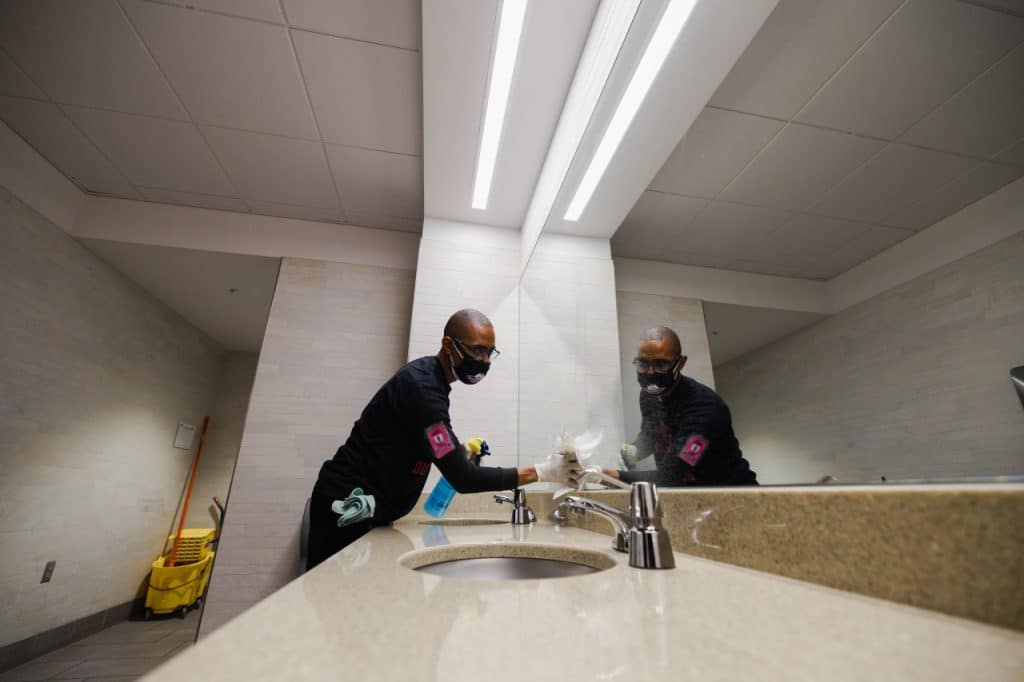
Door handles, light switches, reception counters, shared equipment, and waiting room seating accumulate contaminants quickly in high-traffic professional settings. These surfaces need daily disinfection as part of any credible cleaning plan, not weekly attention.
Restrooms in medical and professional offices require defined procedures that address fixtures, surfaces, and waste removal in a specific sequence. A rushed restroom pass does not meet the standard these facilities require.
Exam rooms, consultation spaces, and treatment areas need targeted attention that goes beyond what standard office cleaning covers. Surfaces in these spaces contact patients directly and turn over multiple times per day.
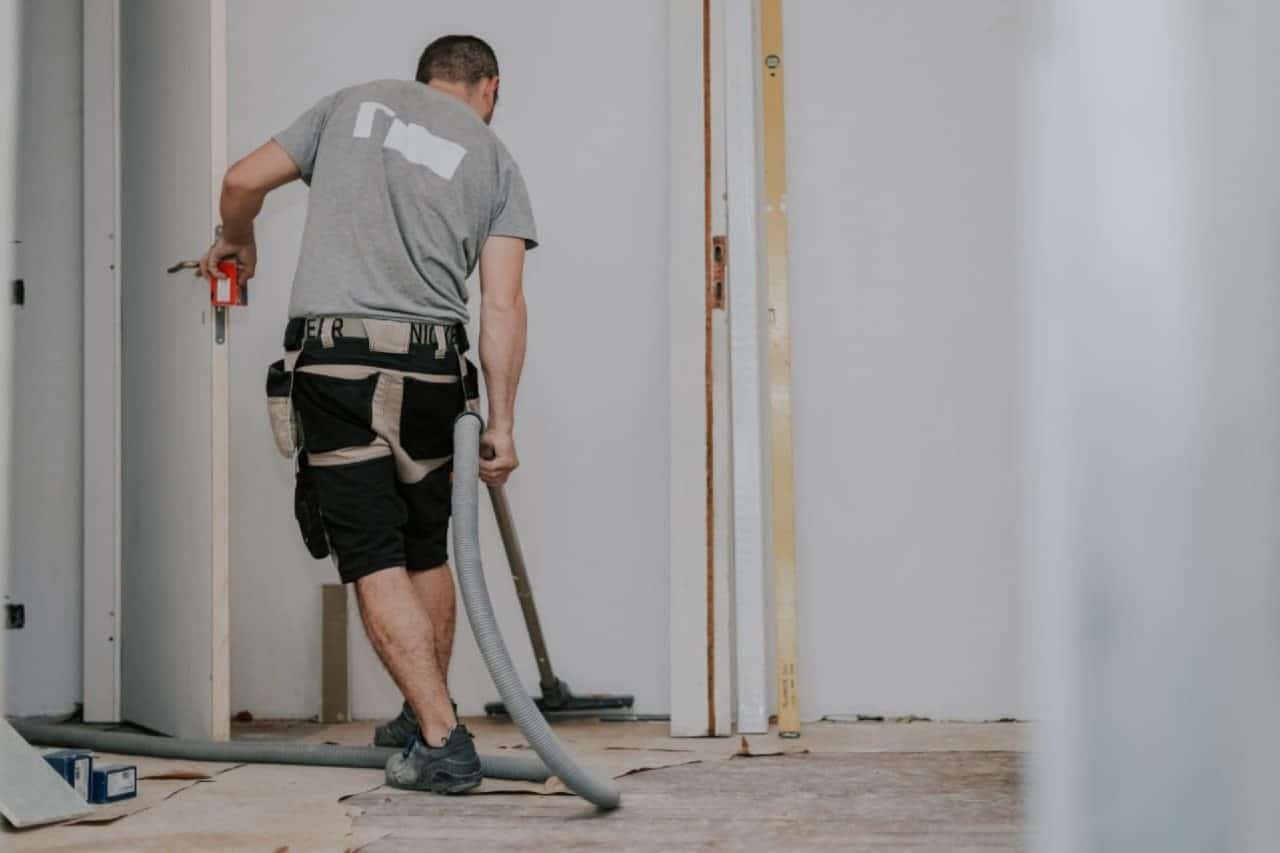
Air quality is part of the picture, too. HEPA vacuums capture approximately 99.97% of airborne particles, making them particularly relevant in medical environments where particulate matter affects patient health. Standard vacuum equipment does not perform at that level.
What Trained Janitorial Staff Actually Bring
Structured protocols are the foundation. Trained staff follow documented procedures designed for commercial and medical-grade environments, not informal routines built around what looks dirty.
Proper chemical selection, correct dwell times, and safe handling of cleaning materials are skills that require training and reinforcement. Consistent checklists and quality control measures close the gaps that informal cleaning routinely leaves open. Ongoing training keeps staff current on equipment, techniques, and cross-contamination prevention as standards evolve.
A customized cleaning plan accounts for the specific facility type, foot traffic patterns, and usage requirements. A dental office has different needs than a law firm. A multi-provider medical practice has different needs than a single-provider clinic. Professional janitorial services built around your facility’s actual profile deliver results that generic schedules cannot.
Your Space Reflects Your Practice

A medical or professional office that looks and smells clean signals competence and care to every person who walks through the door. That signal is not incidental. It is part of the experience your patients and clients are paying for.
Inconsistent cleaning creates visible gaps that erode confidence over time. A waiting room that was spotless last Tuesday but noticeably off this Thursday tells clients something about your standards, even if they cannot articulate exactly what they noticed.
Consistent professional office cleaning services support the image these businesses work to build and maintain. The investment is not in cleaning. It is in the trust that a clean, well-maintained space earns every single day.
Get a Cleaning Plan Built for Your Facility
Dura-Shine Clean works with medical offices, dental practices, and professional service firms that need specialized cleaning standards applied consistently and accountably. Every plan starts with your facility’s specific needs: building size, foot traffic, service areas, and compliance requirements.
Contact Dura-Shine Clean to discuss a customized cleaning plan for your medical or professional office. The right plan is not a template. It is built around how your space actually works.