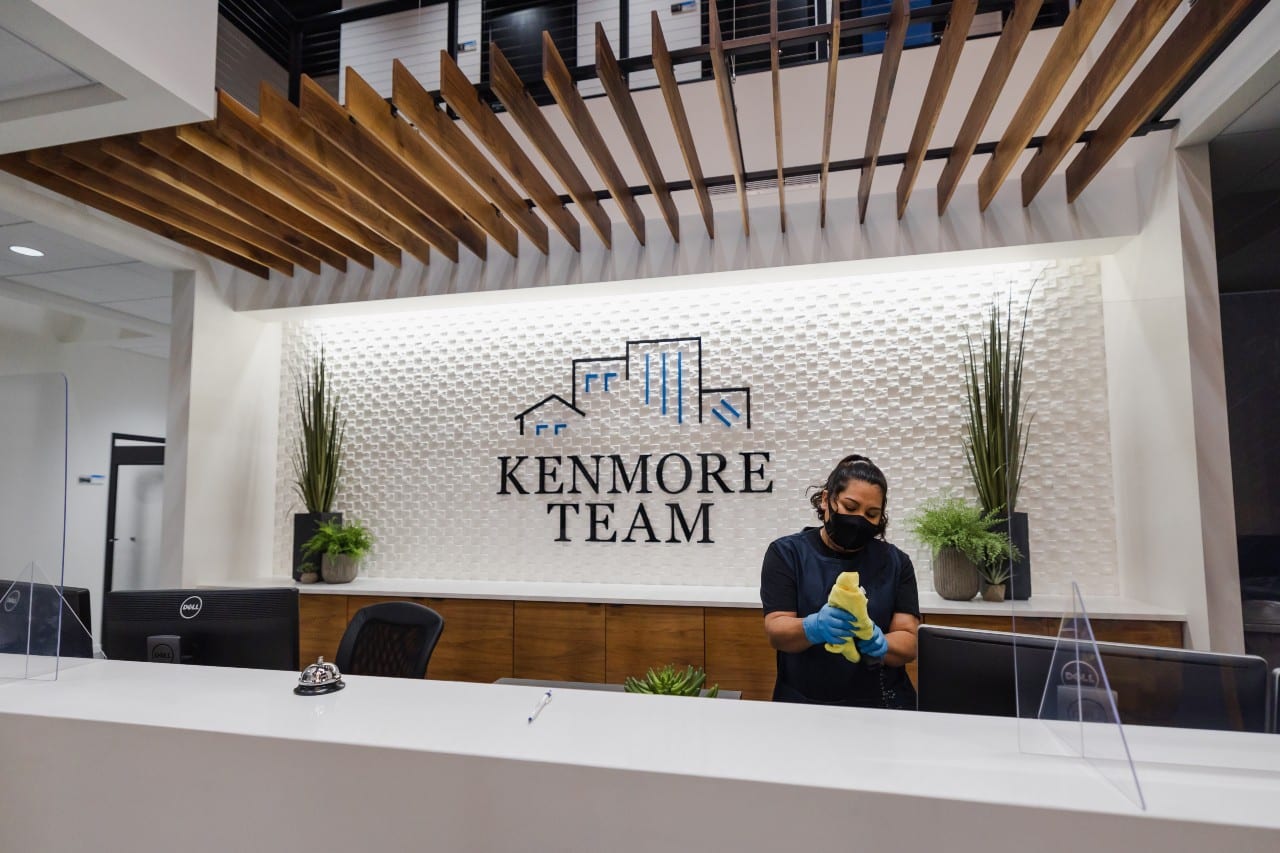
A potential customer pulls into the parking lot of a retail storefront. The front windows are streaked with last week’s rain, dust, and a layer of pollen. They make a snap judgment about the business inside before the door is even opened. That decision happens in two seconds.
According to Fortune Business Insights, the global window cleaning services market grew from $151.18 billion in 2025 to $162.35 billion in 2026. Businesses are investing in professional window cleaning for a reason. Clean windows shape every customer impression.
The right cleaning schedule protects both the appearance and the budget. Too little service costs the business in lost impressions. Too much money is wasted on unnecessary frequency.
In this post, you’ll learn:
- The factors that determine how often your commercial windows need cleaning
- The recommended frequencies for different business types
- The benefits of regular professional services
- When to schedule high-rise window cleaning and pressure washing
Factors That Affect Commercial Window Cleaning Frequency
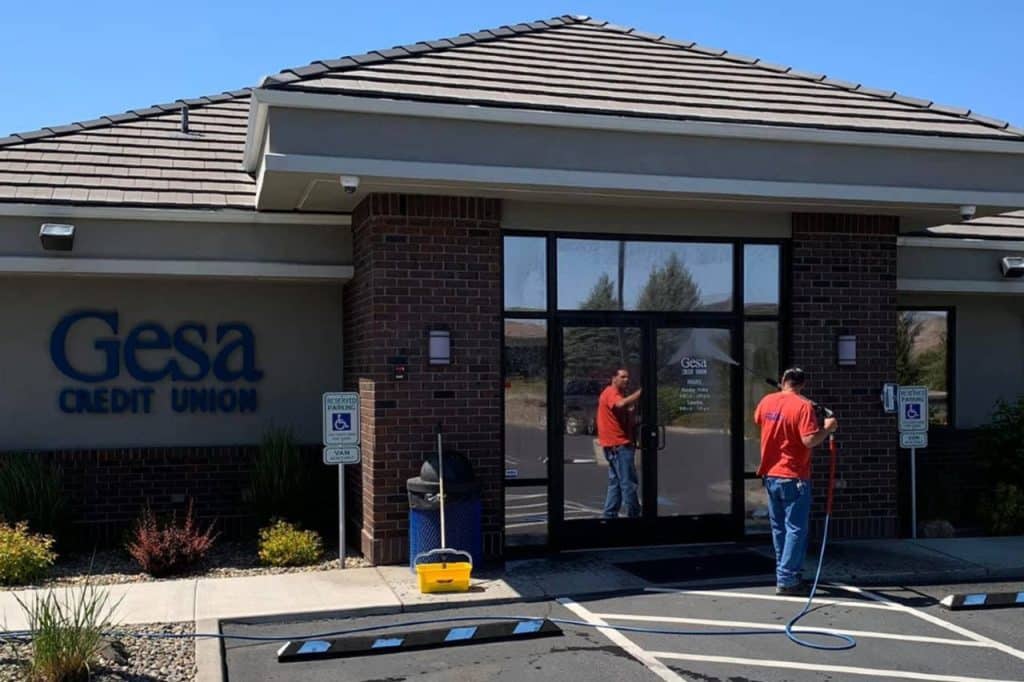
No two businesses need the exact same cleaning schedule. The right frequency depends on a handful of variables that shape how fast commercial windows get dirty and how quickly that dirt becomes visible to customers.
According to Getjobber’s 2026 cleaning industry report, the global cleaning sector is expected to reach $482 billion in 2026, with 62 percent of companies investing in IoT-enabled tools to improve service delivery.
The industry is growing because demand for professional, scheduled cleaning is growing too.
Location, Weather, and Environmental Conditions
Location drives the cleaning frequency more than almost any other factor. Urban storefronts collect exhaust, road grime, and high-traffic foot dust faster than suburban office buildings. Coastal businesses deal with salt spray, while desert regions face hard water stains.
Weather and environmental conditions matter just as much. Spring pollen, summer dust, fall debris, and winter slush each create their own challenges for clean windows.
Building Type, Height, and Customer Expectations
Building type sets the baseline. A glass-fronted retail storefront needs its windows to sparkle daily. An industrial facility on the edge of town might be fine with quarterly service.
The factors most worth weighing when setting frequency:
- Location and surrounding environment, including high-traffic urban areas vs. suburban settings
- Weather and environmental conditions across all four seasons
- Building height and window accessibility for safe cleaning
- Industry standards and customer expectations in your sector
- Budget considerations and the cost-benefit of regular service
Each factor pushes the schedule in one direction or the other, and the correct answer balances them.
Recommended Frequencies for Commercial Window Washing by Business Type
Different industries require very different commercial window-washing schedules. The table below offers a starting point for the most common business types, with frequency ranges based on industry standards and customer expectations.
Commercial Window Cleaning: Recommended Frequencies by Business Type
| Business Type | Recommended Frequency | Why |
| Retail storefronts | Weekly to bi-weekly | High customer traffic, first impressions matter daily |
| Restaurants | Weekly to monthly | Food prep, grease, and customer-facing visibility |
| Office buildings | Monthly to quarterly | Lower direct customer traffic, professional appearance |
| Medical facilities | Bi-weekly to monthly | Hygiene standards and patient comfort priorities |
| Industrial facilities | Quarterly to semi-annually | Lower customer-facing windows, more debris exposure |
| High-rise buildings | Quarterly to semi-annually | Complex access, professional crews, and equipment are needed |
Retail Storefronts and Restaurants
Retail storefronts and restaurants live on customer impressions. Both deal with high foot traffic, fingerprints, and exposure to weather on the most visible windows. Weekly to bi-weekly cleaning is the norm for businesses where the front window is the first thing customers see.
Office Buildings, Medical Facilities, and Industrial Sites
Office buildings, medical facilities, and industrial sites operate on longer schedules. Offices typically need monthly or quarterly service. Medical facilities typically use bi-weekly or monthly cleaning to meet hygiene standards. Industrial sites usually run on quarterly schedules.
Benefits of Regular Professional Window Cleaning
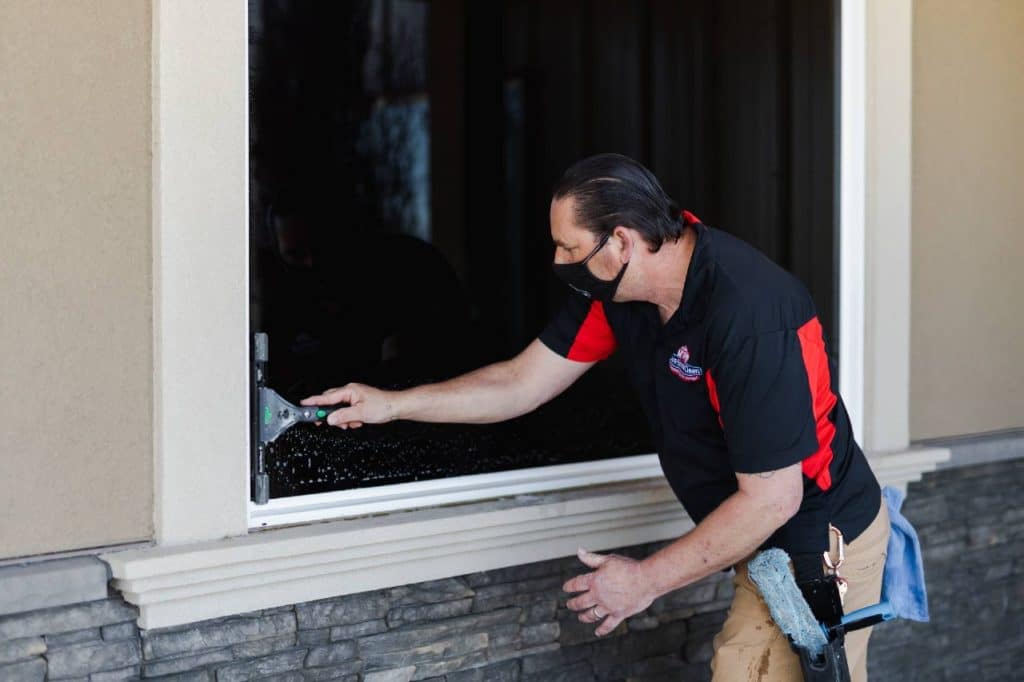
Regular professional window cleaning delivers real returns for a business. The visual impact is the obvious win, but the benefits run deeper, from natural light to extended window lifespan.
Clear Windows, Natural Light, and Curb Appeal
Clear windows let in more natural light, which improves employee well-being and brightens the entire interior. Studies on workplace design have shown that natural light improves productivity and mood, and that starts with windows free of streaks and buildup.
Curb appeal is the other half of the equation. Sparkling windows signal pride in the property and attract customers before they ever walk through the door. The cost of clean windows is far lower than the cost of a customer who turns away because of a dirty storefront.
Extended Lifespan With Regular Maintenance
Regular maintenance also protects the glass itself. Mineral deposits, hard water stains, and airborne debris cause permanent etching when left long enough. Professional window cleaning removes these contaminants before they damage the glass.
A well-maintained window lasts longer and looks newer for years. That preserves the building’s appearance and defers the cost of a full window replacement.
Cost Considerations for Commercial Window Cleaning Services
Cost is always part of the equation when scheduling commercial window cleaning services. The smart approach weighs the price of regular service against the cost of neglect.
Regular Service vs. Sporadic Deep Cleaning
Regular service typically costs less per visit than a one-off deep cleaning. Most window cleaners offer volume discounts for scheduled service contracts, and the windows stay in consistently better condition between visits.
Sporadic deep cleaning may seem cheaper up front, but the costs add up. Heavy buildup takes more time, more equipment, and more aggressive techniques to remove, which pushes the per-visit price higher.
Hidden Costs of Neglected Commercial Windows
Neglected commercial windows carry hidden costs beyond appearance. Mineral deposits and hard water stains etch into the glass over time. Trapped debris scratches surfaces. Damaged windows reduce energy efficiency and lose their integrity.
The cost of replacing a building’s windows runs into thousands of dollars per panel. Regular maintenance at a fraction of that price protects the property’s long-term value.
Seasonal Considerations for Clean Windows Year-Round

Every season brings its own challenges for keeping windows clean. Adjusting frequency seasonally keeps the schedule aligned with what nature is throwing at the building.
Spring Pollen, Summer Dust, and Fall Debris
Spring brings pollen that coats every exterior surface in yellow film. Summer adds dust, heat haze, and airborne pollutants from construction and traffic. Fall sweeps in leaves and debris that stick to wet surfaces.
Each of these creates the kind of buildup that turns clean windows cloudy within days. More frequent cleaning during these months protects the appearance without major schedule changes.
Winter Weather and Year-Round Strategy
Winter weather adds salt spray, road slush, and mineral deposits from melting snow that splashes onto exterior glass. Interior windows fog and streak from heating cycles. Some businesses reduce frequency in winter, while others maintain it to handle the salt and grime.
A year-round strategy adjusts cleaning frequency by season instead of using the same schedule month after month. That balance keeps commercial windows looking sharp without overspending on unnecessary visits.
Signs Your Business Needs More Frequent Cleaning
Sometimes the existing schedule is not enough. The windows tell the story when they need attention sooner than the next scheduled visit. Watch for these signs:
- Visible dirt, dust, or pollen accumulation showing up days after the last cleaning
- Streaking or residue buildup that makes it hard to see clearly through the glass
- Customer or employee complaints about smudges, fingerprints, or general appearance
- Hard water stains or mineral deposits that did not exist at the last service
- Difficulty seeing through windows in natural daylight
- A property’s curb appeal slipping below what the brand standard requires
Any one of these is a signal to bump up the frequency. Two or more together mean the current schedule does not match the conditions.
High Rise Window Cleaning and Pressure Washing Considerations
High-rise window cleaning and pressure washing both require specialized equipment, trained crews, and a different approach from ground-level service.
Safety and OSHA Standards for High Rise Window Cleaning
High-rise window cleaning involves working at heights, which requires strict adherence to OSHA standards. Certified crews use rope access systems, suspended platforms, and personal fall arrest equipment to safely clean exterior glass.
Cutting corners on safety is not an option. Reputable window cleaners carry full insurance, follow OSHA standards, and document every job to protect both the workers and the building.
When Pressure Washing Belongs in the Schedule
Pressure washing is not just for windows. Brick exteriors, sidewalks, parking areas, and the building’s foundation often require a separate pressure-washing schedule to maintain curb appeal and protect surfaces from buildup.
Many commercial cleaning providers bundle pressure washing with window cleaning services for a combined exterior maintenance package. That coordination saves time, money, and the disruption of scheduling two separate vendors.
Why a Professional Window Cleaning Partner Matters for Your Business

A professional window-cleaning partner brings more than just clean glass. The right team understands the rhythm of a business, the standards of its industry, and the budget constraints behind every scheduling decision.
What an experienced professional window cleaning partner brings to a commercial client:
- Flexible scheduling options that fit around business operations and customer hours
- Customized window cleaning service plans matched to building type, location, and budget
- Trained crews following OSHA standards for high-rise and ground-level safety
- Quality equipment that delivers streak-free, sparkling windows on every visit
- Reliable scheduling and consistent quality results across every commercial cleaning visit
- Honest recommendations on frequency, including pressure washing add-ons when they make sense
The goal is not the most frequent service. The goal is to achieve the right frequency for the property, delivered by a team that treats the business as a long-term partner.
Get a Free Estimate for Commercial Window Cleaning That Fits Your Business
The right window-cleaning schedule protects the appearance, supports the budget, and improves the daily experience for everyone who walks through the door. There is no one-size-fits-all answer. The right frequency comes from understanding the property and the goals.
At Dura-Shine Clean, we build commercial window cleaning schedules tailored to each business and budget. Our team handles weekly retail storefront service to quarterly office building maintenance, with flexible scheduling and transparent pricing.
Contact us today for a free estimate and a customized service plan. The right cleaning frequency keeps your business looking professional year-round.